A power outage can turn an ordinary day into a stressful situation quickly. For families throughout Austin and the surrounding Hill Country, severe thunderstorms, lightning, winter ice storms, extreme summer temperatures, and occasional electrical grid disruptions can leave homes without power for hours or even days. One minute you're cooking dinner or enjoying the air conditioning, and the next you're searching for flashlights and wondering when the electricity will return.
The good news is that preparing for an outage doesn't have to be expensive. Simple, affordable steps can help families stay safe, preserve food, remain connected, and stay comfortable when the power goes out. For those looking for additional peace of mind, backup power solutions such as portable power stations, portable generators, and standby generators can provide extra protection during longer outages. With a little planning, Austin-area homeowners can be ready for whatever the next storm brings.
Why Austin-Area Families Should Prepare for Power Outages
Austin's weather can be unpredictable, particularly during the spring and summer storm seasons. Severe thunderstorms can bring heavy rain, strong winds, lightning, and falling tree limbs that damage electrical equipment or interrupt utility service.
Winter weather presents another challenge. Although Austin doesn't experience the same prolonged freezing conditions as some northern states, occasional ice storms can create hazardous conditions for trees, power lines, and electrical infrastructure.
Extreme summer heat is another important consideration. Losing air conditioning during a hot Texas afternoon can quickly become uncomfortable, particularly for households with young children, older family members, or individuals who are sensitive to high temperatures.
A power outage can affect much more than household lighting.
Some of the most common problems include:
- Refrigeration: Refrigerators and freezers stop operating, potentially putting perishable food at risk.
- Air conditioning: Indoor temperatures can rise quickly during the summer.
- Medical equipment: Certain household medical devices require a dependable source of electricity.
- Communication: Phones, internet equipment, and other electronics eventually lose power.
- Household routines: Cooking, laundry, charging devices, and other everyday activities become more difficult.
- Home security: Electrically powered cameras, alarms, garage doors, and access systems may stop functioning.
Even a relatively short outage can be inconvenient. Longer interruptions can create genuine safety concerns, especially when extreme temperatures are involved.
Preparing ahead of time gives families more options and helps reduce the stress of dealing with an unexpected loss of electricity.
Low-Cost Ways to Prepare Before the Electricity Goes Out
You don't need to purchase a generator or invest in expensive emergency equipment to start preparing your home. In fact, some of the most useful outage preparations are relatively inexpensive.
Here are several practical steps Austin homeowners can take.
1. Keep Flashlights and Extra Batteries Available
It might sound obvious, but flashlights are among the most useful items to have during an outage.
Keep a few battery-powered flashlights in convenient locations throughout the house. Make sure everyone in the family knows where they are, especially children who might become frightened when the lights suddenly go out.
Battery-powered lanterns are another good option because they can illuminate a larger area without requiring anyone to hold them.
Avoid relying exclusively on candles. Although they can provide light, unattended candles introduce an unnecessary fire hazard during an already stressful situation.
2. Keep Portable Phone Chargers Ready
A working cell phone can be extremely important during an extended outage. Families may need to check weather alerts, contact relatives, communicate with utility providers, or receive emergency information.
A portable power bank is an inexpensive way to keep a phone charged when household outlets aren't working.
Consider keeping at least one fully charged power bank in your emergency supplies. Families with multiple phones may benefit from having two or three available.
It's also a good idea to conserve battery life by reducing screen brightness, closing unnecessary applications, and limiting video streaming.
3. Store Drinking Water and Nonperishable Food
A prolonged outage can make it difficult to prepare meals, particularly when electric appliances are unavailable.
Keep a supply of bottled drinking water and shelf-stable foods that don't require refrigeration. Canned goods, crackers, peanut butter, granola bars, and other packaged foods are convenient options.
Remember to include food that children will actually eat. Having familiar snacks available can make an unexpected outage a little easier for everyone.
Keep a manual can opener with your emergency supplies so you're not dependent on an electric appliance.
4. Protect Refrigerated and Frozen Food
One of the easiest ways to preserve food during an outage is to keep refrigerator and freezer doors closed as much as possible.
An unopened refrigerator generally keeps food cold for approximately four hours. A full freezer can maintain its temperature for approximately 48 hours, while a half-full freezer typically maintains it for around 24 hours, provided the doors remain closed.
If an outage continues, a cooler with ice can help preserve certain perishable items.
Food safety should always come first. When in doubt, throw out perishable food that has been held at unsafe temperatures rather than taking unnecessary chances.
5. Put Together a Basic Family Emergency Kit
A simple emergency kit can save time when an outage happens unexpectedly.
Consider including:
- Flashlights and extra batteries
- Portable phone chargers
- Bottled water
- Nonperishable snacks
- First-aid supplies
- Battery-powered radio
- Basic hygiene supplies
- Necessary prescription medications
- Blankets and seasonal clothing
- Important emergency contact information
Families with infants, older relatives, or household members who rely on medical equipment should account for those additional needs when preparing their supplies.
It's also helpful to have a plan for checking on nearby relatives and neighbors, particularly anyone who may need additional assistance.
6. Identify a Cooler Place to Go During Extreme Heat
Losing air conditioning during an Austin summer can become a serious concern.
If your home becomes excessively hot during an extended outage, consider temporarily relocating to a cooler location. Public cooling centers, libraries, community facilities, and other designated locations may be available depending on the situation.
Check local announcements for operating hours and availability before traveling.
Families should also avoid using outdoor grills, camp stoves, or other combustion appliances inside the home to prepare food during an outage.
Affordable Backup Power Options for Austin Homeowners
Emergency supplies are important, but they don't solve every problem. If your family wants to keep certain household electronics or appliances operating during an outage, backup power equipment may be worth considering.
Fortunately, there are several options available at different price points.
Portable Power Stations
Portable power stations are battery-powered devices that can provide electricity to selected electronics and small appliances.
Depending on their capacity, they may be able to operate:
- Cell phones and tablets
- Laptop computers
- Small LED lights
- Battery chargers
- Certain small fans
- Other low-wattage electronics
Some models can also be recharged using compatible solar panels.
Portable power stations are convenient because they don't require gasoline, produce no exhaust during operation, and can generally be used indoors according to the manufacturer's instructions.
However, their capabilities are limited by battery capacity and power output. They typically aren't designed to operate an entire household or power energy-intensive equipment such as central air conditioning.
For families primarily concerned with keeping phones charged and maintaining basic lighting, they can be a practical option.
Battery-Powered Fans and Lighting
Another inexpensive way to improve comfort during an outage is to purchase a few rechargeable fans and battery-powered lights.
During a hot summer afternoon, even a small battery-powered fan can make a difference, particularly when used in a shaded room with good ventilation.
These products won't replace an air conditioning system, but they can provide some relief while families wait for electricity to return or make arrangements to relocate.
Rechargeable fans are available in different sizes, and some models can operate for several hours depending on their battery capacity and speed settings.
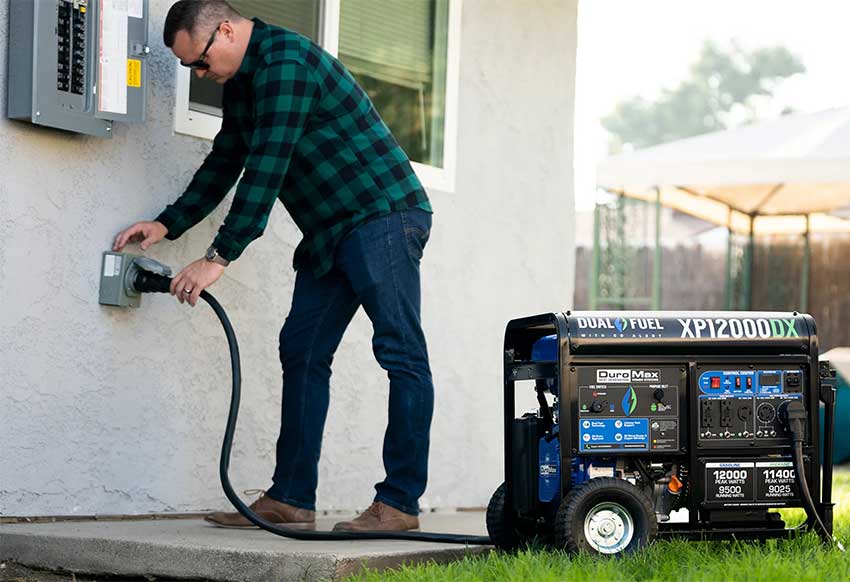
Portable Gasoline Generators
Portable generators offer more backup power than many small battery-powered devices.
Depending on their size and capacity, they may operate refrigerators, freezers, lighting, fans, and selected household appliances.
They can be useful for families who want to maintain a few essential functions without investing in a permanent standby generator.
However, portable generators require more attention and preparation.
Homeowners must have an appropriate outdoor operating location, maintain an adequate fuel supply, follow manufacturer instructions, and manage the equipment safely.
A portable generator also needs a safe, approved method of connecting to household electrical circuits if the intention is to power selected hardwired appliances or circuits.
Generator Interlock Kits and Proper Transfer Equipment
Some Austin homeowners already own portable generators but don't have a safe way to connect them to their household electrical systems.
A properly designed generator interlock kit or transfer switch can provide a way to connect a compatible portable generator to selected household circuits.
An interlock arrangement is designed to prevent the utility main breaker and generator breaker from being switched on simultaneously. This helps prevent dangerous backfeeding into utility lines.
The equipment must be compatible with the electrical panel and generator, correctly installed, and compliant with applicable electrical requirements.
This is not a situation where homeowners should improvise with extension cords, homemade connections, or other makeshift arrangements.
A qualified electrician can evaluate the existing electrical panel, determine whether an interlock or transfer switch is appropriate, and help identify which household circuits can be supported by a portable generator.
For families looking for an affordable way to improve their existing backup power setup, this may be worth discussing with a professional.
Why a Standby Generator May Be Worth Considering
Portable generators can be helpful, but they aren't always the most convenient solution for families who regularly experience outages or want more dependable backup power.
A permanently installed standby generator offers a different approach.
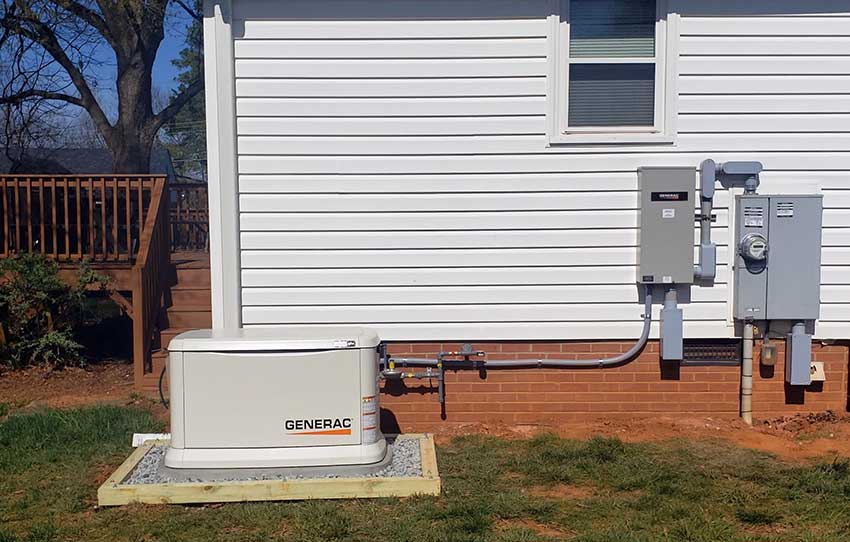
Unlike a portable generator, a standby unit is installed outside the home and connected to the electrical system through appropriate transfer equipment. Many residential systems operate using natural gas or propane, depending on fuel availability and the equipment selected.
When utility power is interrupted, an automatic transfer switch can detect the outage, disconnect the home from the utility supply, and transfer the designated electrical loads to generator power.
When utility service returns and stabilizes, the system can transfer the home back to normal utility power.
The major advantage is convenience. Homeowners don't have to retrieve a portable generator, move it outdoors, connect extension cords, or manually establish a connection each time an outage occurs.
Depending on the generator's capacity and the home's electrical requirements, a standby system can support essential household circuits or a larger portion of the property.
This may include:
- Refrigerators and freezers
- Selected lighting and electrical outlets
- Heating equipment
- Air conditioning, when properly sized
- Certain medical and household equipment
- Other essential electrical circuits
Generator sizing is particularly important. A system intended to operate a refrigerator, several lights, and a few outlets has very different requirements from one expected to support central air conditioning and multiple major appliances.
An electrician can evaluate the home's electrical demand and help determine what size generator makes sense.
For Austin-area families who want a more dependable solution for extended outages, professionally installed standby generators can automatically restore backup power when utility service is interrupted, helping keep essential household systems operating without the setup required by portable generators. Homeowners considering this upgrade can learn more about Tejas Electric's standby generator installation services.
For households that want a more convenient way to maintain essential electrical functions during severe weather, a standby generator can be a worthwhile long-term consideration.
Should You Install a Generator Yourself or Hire a Licensed Electrician?
Many homeowners enjoy DIY projects. If you're comfortable working with tools, installing shelving, replacing fixtures, or handling basic home maintenance, it might be tempting to approach a generator installation as another weekend project.
However, generator installations involve much more than placing equipment outside and connecting a few electrical wires.
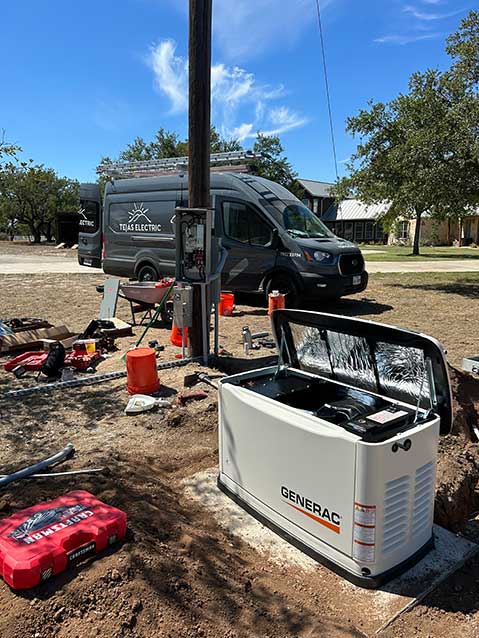
A typical standby generator installation may involve:
- Evaluating household electrical demand
- Selecting an appropriately sized generator
- Installing an automatic transfer switch
- Connecting the generator to the home's electrical system
- Coordinating the fuel supply
- Establishing proper grounding and bonding
- Meeting manufacturer clearance and ventilation requirements
- Obtaining applicable permits and inspections
- Testing the completed installation
Mistakes involving generator connections can create dangerous electrical conditions, including backfeeding, electrical shock, fire hazards, and damage to household equipment.
There are also important considerations involving fuel connections, exhaust placement, and carbon monoxide exposure.
Is DIY generator installation allowed in Texas?
Texas has specific licensing requirements for electrical work, along with limited exemptions for certain property owners. A homeowner may qualify for an exemption to perform electrical work on their own homestead under applicable conditions. However, that doesn't mean any handy person can legally perform electrical work for someone else, or that permit, inspection, and applicable code requirements can be ignored.
Local requirements also matter. Austin-area projects may have permitting and inspection requirements depending on the property and scope of work.
For most homeowners, having a qualified, properly licensed electrician handle the electrical portion of a generator installation is the more sensible approach.
A licensed electrician can evaluate the existing electrical system, determine the appropriate transfer equipment, and ensure the installation is completed according to applicable requirements.
If natural gas or propane connections are involved, the fuel system should also be handled by appropriately qualified professionals.
Tejas Electric works with homeowners throughout the Austin area on electrical improvements and backup power solutions. Having an experienced electrical contractor evaluate the project before purchasing equipment can help prevent compatibility problems and unnecessary expenses.
Ultimately, a generator is supposed to make your home safer and more dependable during an outage. Proper installation is an important part of achieving that goal.
Important Generator Safety Tips Every Family Should Know
Whether you own a portable generator or are considering a permanently installed standby system, safety should always be a priority.
Here are several important precautions.
Never operate a portable generator indoors.
Portable generators produce carbon monoxide, an odorless and potentially deadly gas. Never operate one inside your home, garage, shed, or other enclosed or partially enclosed space.
Keep portable generators away from doors and windows.
Follow the manufacturer's clearance instructions and current safety guidance. Position equipment outdoors where exhaust cannot enter the home through windows, doors, vents, or other openings.
Never connect a generator directly to a household wall outlet.
This dangerous practice, sometimes called backfeeding, can energize utility lines and put electrical workers and neighbors at risk. Use properly installed transfer equipment.
Keep carbon monoxide detectors operational.
Make sure your home has functioning carbon monoxide alarms, particularly near sleeping areas. Test them regularly and follow manufacturer recommendations for maintenance and replacement.
Don't overload your generator.
Check the generator's rated running and starting wattage before connecting appliances. Motors and compressors often require additional power when starting.
Schedule regular generator maintenance.
Standby generators need periodic inspections, testing, and maintenance according to the manufacturer's recommendations. Having a generator installed doesn't mean it can be ignored until the next storm.
What to Do When Power Returns
When electricity finally comes back, it's tempting to turn everything on and return to normal immediately.
However, taking a few minutes to check your home's electrical equipment can help prevent additional problems.
Start by checking refrigerators and freezers. If food has been exposed to unsafe temperatures, discard anything that may no longer be safe to eat.
Next, inspect household electronics and appliances. If you notice unusual behavior, avoid repeatedly switching equipment on and off until you've determined whether there's an electrical problem.
Pay attention to warning signs such as:
- Flickering or unusually dim lights
- Breakers that repeatedly trip
- Buzzing sounds coming from electrical panels
- Warm or discolored outlets
- Burning odors
- Appliances that suddenly stop working properly
These symptoms shouldn't be ignored. They can indicate electrical problems that deserve professional attention.
If you have a portable generator connected through transfer equipment, follow the manufacturer's instructions and the installed system's operating procedure for switching back to utility power.
Homeowners with automatic standby generators should allow the transfer system to complete its normal operation and avoid manually changing electrical connections.
If anything seems unusual, contact a qualified electrician before continuing to use the affected equipment.
Get Your Austin Home Ready for the Next Power Outage
For Austin and much of Central Texas, the current winter outlook for December 2026 through February 2027 calls for a wetter-than-normal season, driven in part by a strong El Niño pattern that typically brings stormier conditions to the southern United States. While forecasters are not predicting an especially cold winter overall, residents should be prepared for an increased chance of storms, heavy rain, and occasional freezing weather or ice. Because seasonal forecasts cannot predict specific snow or ice events months in advance, now is a good time for Austin-area families to prepare for potential power outages, hazardous road conditions, and other winter weather impacts.
If you're considering additional backup power options for your home, it's important to choose a solution that fits your household's needs and budget. Tejas Electric helps homeowners throughout Austin and Central Texas evaluate backup power options, electrical upgrades, and generator installations. A little preparation today can make a big difference when the next power outage occurs.